
Quantum Computing and Cryptocurrency: Should You Panic? No, But You Should Plan
Updated: May 13

At The Law Offices of Carolina Nunez, P.A., Attorney Carolina Nunez advises clients on cryptocurrency estate planning, blockchain law, and digital asset protection. Call (407) 900-FIRM to speak with a crypto attorney in Central Florida.
If you follow cryptocurrency news, you have probably seen the headlines: quantum computers will break Bitcoin. Your wallet is not safe. Crypto is dead. The panic is everywhere, and it intensifies every time a tech company announces a new quantum chip or publishes research about qubit breakthroughs.
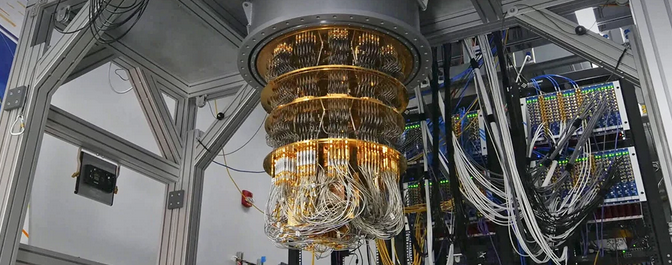
On March 30, 2026, Google's Quantum AI team published a whitepaper estimating that breaking the elliptic curve cryptography used by Bitcoin and Ethereum may require fewer than 500,000 physical qubits, a roughly 20-fold reduction from earlier estimates. The paper modeled a scenario where a quantum attacker could derive a private key from an exposed public key and intercept a Bitcoin transaction within nine minutes. That is the kind of finding that makes people nervous.
So should you panic? No. Should you plan? Absolutely. Here is what the quantum computing threat actually looks like, what the crypto industry is doing about it, and what it means for your estate plan if you hold digital assets in Florida.
LEGAL DISCLAIMER: This article provides general informational content regarding quantum computing, cryptocurrency security, and estate planning considerations for digital assets. It does not constitute legal advice or create an attorney-client relationship. All facts referenced are based on publicly available reporting as of March 31, 2026.
What People Are Hearing About Quantum Computing Breaking Crypto

The core concern is straightforward. Bitcoin, Ethereum, and most other cryptocurrencies rely on elliptic curve cryptography (ECDSA) to generate private and public key pairs. Your private key proves ownership. Your public key creates your wallet address. The security of the entire system depends on the mathematical difficulty of deriving a private key from a public key.
Classical computers cannot do that calculation in any meaningful timeframe.
Quantum computers can. Using an algorithm developed by MIT mathematician Peter Shor in the 1990s, a sufficiently powerful quantum computer could theoretically solve the mathematical problem that protects every cryptocurrency wallet in existence. The question is not whether quantum computers can do this. The question is when.
Google's Willow chip, released in late 2024, has 105 qubits. Breaking Bitcoin's encryption would require an estimated 2,330 logical qubits, and because of current error rates, each logical qubit requires roughly 1,000 physical qubits. That puts the practical requirement somewhere around 2 million physical qubits. We are nowhere near that today. Most researchers put a realistic Q-Day, the day quantum computers can actually break current encryption, somewhere between 2035 and 2050. Some estimates are more aggressive, and Google's latest whitepaper suggests the timeline may be compressing.
The Reality: Post-Quantum Cryptography Already Exists
The crypto industry is not sitting around waiting to be disrupted. In August 2024, the National Institute of Standards and Technology (NIST) finalized the first post-quantum cryptography standards, including CRYSTALS-Kyber for encryption and CRYSTALS-Dilithium and SPHINCS+ for digital signatures. These algorithms are designed to resist attacks from both classical and quantum computers.
The Ethereum Foundation has created a dedicated post-quantum research team and elevated quantum security to a strategic priority. Coinbase formed a Quantum Advisory Council. Solana developers introduced Winternitz Vaults, which allow users to store assets in smart contract-based vaults secured by hash-based, one-time signatures. Bitcoin developers have proposed soft forks that would migrate wallets to quantum-resistant addresses on a defined timeline.
The upgrades are coming. The infrastructure is being built. Cryptocurrency will survive quantum computing the same way the internet survived every security threat before it: by upgrading its defenses before the attack arrives.
The Execution Challenges: Forks, Dead Projects, and Self-Custody Migrations
The technology exists. The hard part is getting decentralized networks to agree on implementation. Bitcoin developer Jameson Lopp has warned that even if quantum computers never break Bitcoin in the next decade, the process of upgrading the protocol and migrating user funds could itself take five to ten years. Bitcoin does not have a CEO who can flip a switch. Every upgrade requires a Bitcoin Improvement Proposal, community consensus, and voluntary user adoption.
That means every crypto holder who uses self-custody wallets will eventually need to migrate their holdings to new wallet addresses secured by quantum-resistant cryptography. That migration generates new private keys, new seed phrases, and new recovery procedures. If you hold crypto in cold storage, on a hardware wallet, or across multiple wallets, each one will need to be moved individually.
Dead projects are another concern. Not every blockchain will upgrade. Smaller tokens and defunct protocols may never implement quantum-resistant cryptography, leaving those assets permanently exposed. If you hold assets on a chain that its developers abandon before the upgrade, those tokens could become worthless.
The Satoshi Question: What Happens to Dormant Wallets
The most fascinating subplot in the quantum computing debate involves Satoshi Nakamoto's estimated 1.1 million Bitcoin, currently valued at over $100 billion, sitting untouched since the earliest days of the network. These coins are stored in legacy Pay-to-Public-Key (P2PK) addresses where the public keys are permanently exposed on the blockchain. Modern wallets hide the public key behind a hash until the coins are spent. Satoshi's wallets do not.
If a sufficiently powerful quantum computer emerges, Satoshi's wallets would be among the first targets. If the creator of Bitcoin is no longer alive or accessible, nobody can migrate those coins to safety. The Bitcoin community is already debating whether to freeze vulnerable addresses through a protocol change, or whether to let quantum attackers claim them under the principle that private keys control ownership, regardless of how they were obtained.
Beyond Satoshi, researchers estimate that roughly 6 to 7 million BTC sit in wallets with exposed public keys, either because of early address formats or because their owners reused addresses. That represents hundreds of billions of dollars in potentially vulnerable holdings. For anyone who holds cryptocurrency in Florida or anywhere else, the lesson is clear: dormant wallets are not safe wallets. They need active management, regular security reviews, and a plan for what happens when the cryptographic landscape changes.
What This Means for Your Estate Plan and Digital Assets

This is where the quantum computing conversation stops being abstract and starts being personal. If you hold digital assets in your estate, quantum computing creates planning obligations that did not exist before.
Wallet Migrations Mean Your Estate Documents Need Updating
When you migrate crypto from an old wallet to a quantum-resistant address, you create a new wallet with new keys, a new seed phrase, and new recovery information. If your estate plan references the old wallet address, old seed phrase, or old hardware device, your beneficiaries could be locked out of the new holdings entirely.
Your Digital Asset Memorandum is a Living Document
Under the Florida Fiduciary Access to Digital Assets Act (Florida Statutes § 740), your fiduciary's access to digital assets depends on the instructions you leave. A Digital Asset Memorandum should include every wallet address, seed phrase location, hardware wallet model, exchange account, and access procedure. When quantum upgrades force migrations, that memorandum needs to be updated immediately. Every migration creates a new access path and makes the old one obsolete.
Fiduciaries Need Technical Competence
Whoever you name as the personal representative of your estate or as the trustee of your revocable trust needs to understand what a wallet migration is, why it happens, and how to execute one if you become incapacitated or pass away before the migration is complete. This is not a task for someone who has never used a cryptocurrency exchange.
Dead Tokens Need to Be Accounted For
If you hold tokens on a blockchain that never upgrades to quantum-resistant cryptography, those assets may become worthless or inaccessible. Your estate plan should account for the possibility that some digital assets will not survive the transition. That includes recognizing which holdings are on well-supported chains (Bitcoin, Ethereum, Solana) and which are on projects that may not have the development resources to upgrade.
Frequently Asked Questions
Will quantum computing kill Bitcoin?
No. Quantum computing poses a long-term threat to the cryptographic algorithms currently used by Bitcoin, Ethereum, and other blockchains. The crypto industry is actively developing quantum-resistant cryptography, and NIST has already published finalized post-quantum encryption standards. The network will upgrade before Q-Day arrives. The real challenge is the logistics of that upgrade across decentralized systems.
When will quantum computers be able to break cryptocurrency encryption?
Most researchers estimate that cryptographically relevant quantum computers capable of breaking ECDSA are still at least a decade away, with timelines ranging from 2035 to beyond 2050. However, recent research from Google and others suggests the qubit requirements may be lower than previously thought, and AI-driven error correction is accelerating development. The prudent approach is to prepare now rather than wait for a definitive timeline.
Should I update my estate plan because of quantum computing?
Yes. If you hold cryptocurrency or other digital assets, your estate plan should already include provisions under the Florida Fiduciary Access to Digital Assets Act (Florida Statutes Chapter 740) that authorize your fiduciary to manage, access, and transfer digital assets. As quantum-resistant upgrades require wallet migrations, your Digital Asset Memorandum will need to be updated each time keys, addresses, or recovery procedures change. A one-time estate plan is not sufficient for digital assets. It is a living document that requires periodic review.
What is the harvest now, decrypt later attack?
This refers to a strategy where adversaries collect encrypted data today with the expectation that they will be able to decrypt it using a future quantum computer. In the cryptocurrency context, blockchain data is public and permanent. Any wallet address that has exposed its public key through a transaction is already harvested on the public ledger. When quantum computers become powerful enough, attackers could derive private keys from those stored public keys and access the funds.
Your Crypto Deserves a Plan
Contact Attorney Carolina Nunez

Whether you need to protect cryptocurrency in your estate plan, have questions about blockchain law, or want to discuss how quantum computing impacts your digital holdings, Attorney Carolina Nunez serves clients throughout Orlando, Winter Park, Daytona Beach, Kissimmee, Sanford, Lake Mary, DeLand, Altamonte Springs, and all of Central Florida.


